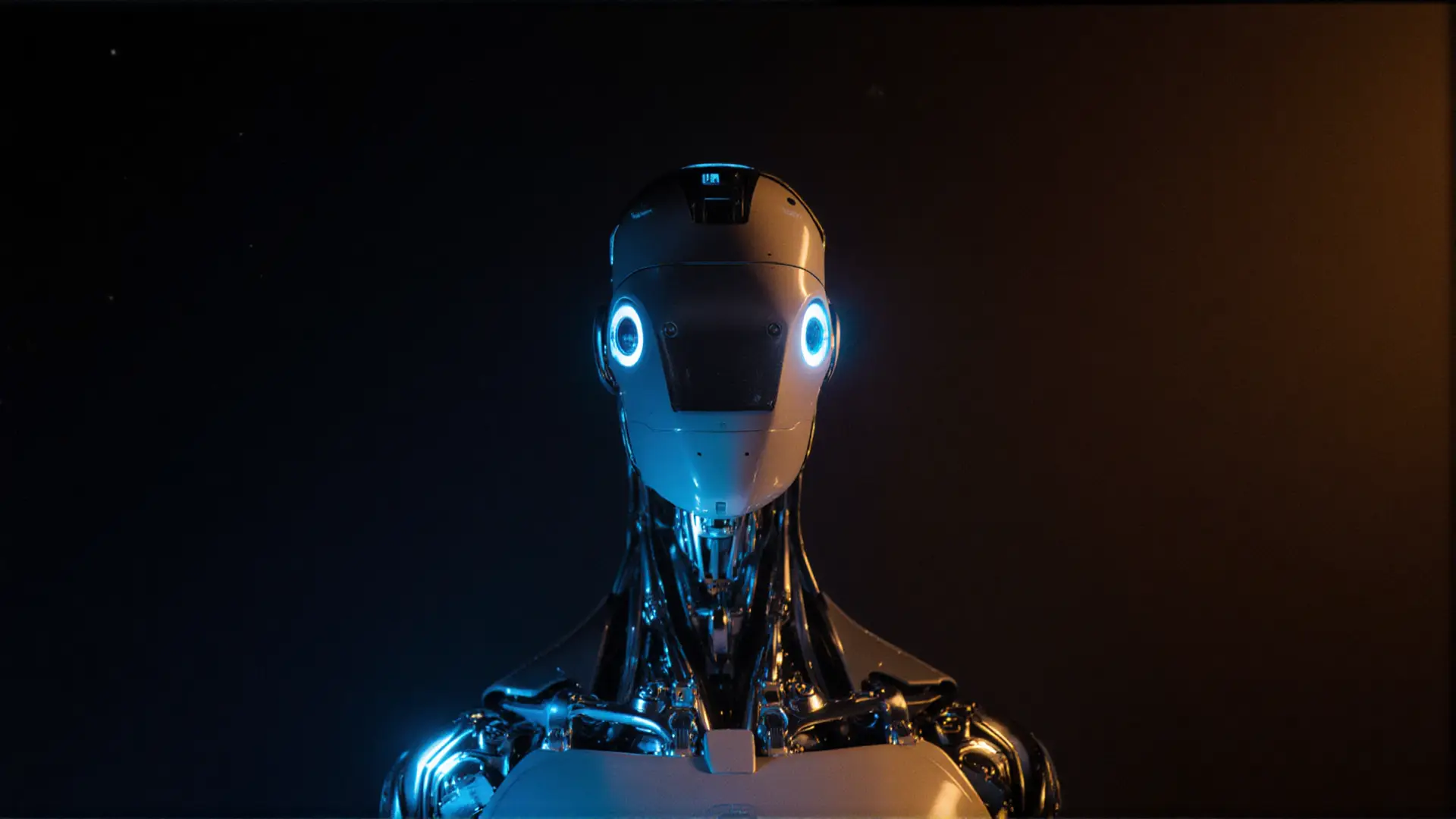
Still sharing that “AI will take my job” meme with a nervous laugh? It’s become a default reaction to the news cycle, a digital punchline for a deep-seated fear. The narrative is loud and clear: the robots are coming, and your paycheck is next on the list. But this popular meme fundamentally misunderstands the nature of the transition we are all living through in 2026.
The Myth of Mass Replacement
Most people frame the AI conversation as a simple story of replacement. They imagine a human worker being directly swapped out for a chatbot, an algorithm, or a robot. While some roles will be automated, this view misses the more nuanced and urgent reality. The true disruption isn’t a one-to-one swap; it’s a fundamental shift in the skills required to add value. Entire industries aren’t disappearing overnight; they are evolving, and the required toolkit is changing with them.
The Real Competitive Landscape
Here’s what’s actually happening on the ground. The people who are losing opportunities are rarely competing against AI itself. They are competing with the colleague, the freelancer, or the job candidate who has already embraced AI as a core part of their workflow. In 2026, the competitive edge belongs to those who use AI to handle repetitive, data-heavy tasks, freeing up their human capacity for strategy, creativity, and interpersonal connection. The threat isn’t a robot taking your desk; it’s the professional who can produce three times the output with greater precision because they know how to effectively collaborate with intelligent tools.
From Threat to Tool: The Upskilling Imperative
Imagine a copywriter who spends hours brainstorming headlines and outlining articles. Now, imagine another copywriter who uses generative AI to produce a hundred headline variations in minutes, analyzes search trends to refine the brief, and then crafts a deeply researched, nuanced piece that no algorithm could replicate. The first is fighting the tide; the second is riding the wave. The focus must shift from fear of replacement to a strategy of augmentation. The most valuable professionals will be those who combine uniquely human skills—empathy, ethical judgment, complex problem-solving—with AI’s computational power to deliver outcomes that were previously impossible.
Future-Proofing Your Career
So, what does this mean for your role? It means auditing your own workflow with a critical eye. Which tasks are you doing that an AI tool could handle, or at least start? Is it data synthesis, first-draft content generation, or market analysis? The goal isn’t to learn every new AI platform, but to cultivate a mindset of continuous learning and adaptation. Focus on developing skills that complement AI: leadership, strategic thinking, negotiation, and deep subject-matter expertise that provides context and quality control for AI-generated outputs. Your future value lies not in competing with technology, but in mastering how to direct it.
The debate over AI and jobs is settled; we are in a new era of human-machine collaboration. Stop worrying about competing with a hypothetical superintelligence and start focusing on outperforming those who are already adapting. Take control of your professional development—explore the tools, experiment with new workflows, and redefine what productivity means for your career. Download our guide to the essential AI collaboration skills for 2026 and start building your advantage today.